You know, the Heavy Haul Tow Truck industry is really heading into a period of big change as we get closer to 2025. With all the new tech coming out and market demands shifting, companies that focus on heavy-duty towing are rethinking their strategies and the gear they use to keep up. As more infrastructure projects pop up and sectors like construction and energy keep growing, the need for dependable, efficient heavy haul tow trucks is more important than ever.
In this fast-moving scene, folks in the industry need to stay on top of the latest trends and tech that are shaping the future of heavy haul towing. From safety improvements to greener, eco-friendly options, getting a good grasp of how these trucks are evolving is pretty much essential if you want to run things smoothly. This article dives into the main trends that are set to define the heavy haul tow truck world, offering some insights on how businesses can adapt and stay competitive doing it. As we go through these changes, it’s really important for operators and fleet managers to think about how they can make the most of these advancements—boosting efficiency and meeting the ever-changing demands of the market is the name of the game.

2025 Heavy Haul Tow Truck Market Overview and Growth Projections
The heavy haul tow truck market is poised for significant growth in 2025, driven by increasing demand across various industries such as construction, mining, and transportation. As infrastructure projects expand globally, the necessity for robust and reliable towing solutions becomes paramount. This trend is supported by advancements in technology, which are enabling manufacturers to develop more efficient and powerful vehicles capable of handling heavier loads with greater ease and safety. Enhanced features such as improved braking systems, advanced suspension technologies, and smart towing capabilities are making heavy haul tow trucks more appealing to industry stakeholders.
Market projections indicate that the heavy haul tow truck segment will see a steady increase in adoption rates as businesses aim to enhance operational efficiency. Fluctuating oil prices and strict emissions regulations are also shaping the market landscape, prompting manufacturers to innovate in ways that improve fuel efficiency while minimizing environmental impact. Additionally, the rise of e-commerce and logistics services is expected to fuel demand for heavy haul towing, as companies seek to transport oversized goods swiftly and securely. As these trends unfold, the heavy haul tow truck market is set to evolve, presenting opportunities for growth and investment.
2025 Heavy Haul Tow Truck Market Trends
Key Advancements in Heavy Haul Tow Truck Technology for 2025
In 2025, advancements in heavy haul tow truck technology are set to transform the towing industry significantly. One of the most notable trends is the integration of smart technology into tow trucks, such as advanced telematics systems. These systems will enable real-time tracking of vehicles, offering operators vital data for optimizing routes and improving response times. Enhanced connectivity will lay the groundwork for remote diagnostics, allowing for proactive maintenance and reducing downtime, which is essential for maximizing operational efficiency in heavy haul situations.
Additionally, the development of lighter, more durable materials is becoming a game changer for heavy haul tow trucks. Innovations in composite materials not only reduce the overall weight of the trucks but also enhance their payload capacity without sacrificing strength. This evolution will enable more efficient towing of larger loads, improving fuel efficiency and lowering operational costs.
Furthermore, the adoption of electric and hybrid technologies is on the rise, providing more environmentally friendly options that meet rigorous emissions standards while delivering the power needed for heavy-duty tasks. These advancements position the heavy haul tow truck sector for a more sustainable and technologically advanced future.
The Role of Automation in Heavy Haul Tow Trucks: Trends and Insights
The integration of automation in heavy haul tow trucks is transforming the landscape of the towing industry. As technology advances, automated systems are enabling tow trucks to operate more efficiently and safely. Features such as advanced telematics, autonomous driving capabilities, and real-time data analytics are rapidly being adopted. These innovations not only enhance the operational efficiency of heavy haul tow trucks but also reduce the potential for human error, which can lead to accidents and costly damages.
Moreover, automation is streamlining the process of load management and tracking. With sophisticated sensors and artificial intelligence, tow trucks can monitor their loads in real-time, ensuring that weight limits are adhered to and optimizing routes for fuel efficiency. This capability is particularly critical in heavy hauling, where precision and safety are paramount.
Additionally, automated communication systems provide drivers with instant updates and alerts, enhancing situational awareness and decision-making on the road. As the industry evolves, the role of automation in heavy haul tow trucks will continue to expand, shaping a safer and more efficient future for heavy towing operations.
Sustainability Practices Impacting Heavy Haul Tow Truck Manufacturing
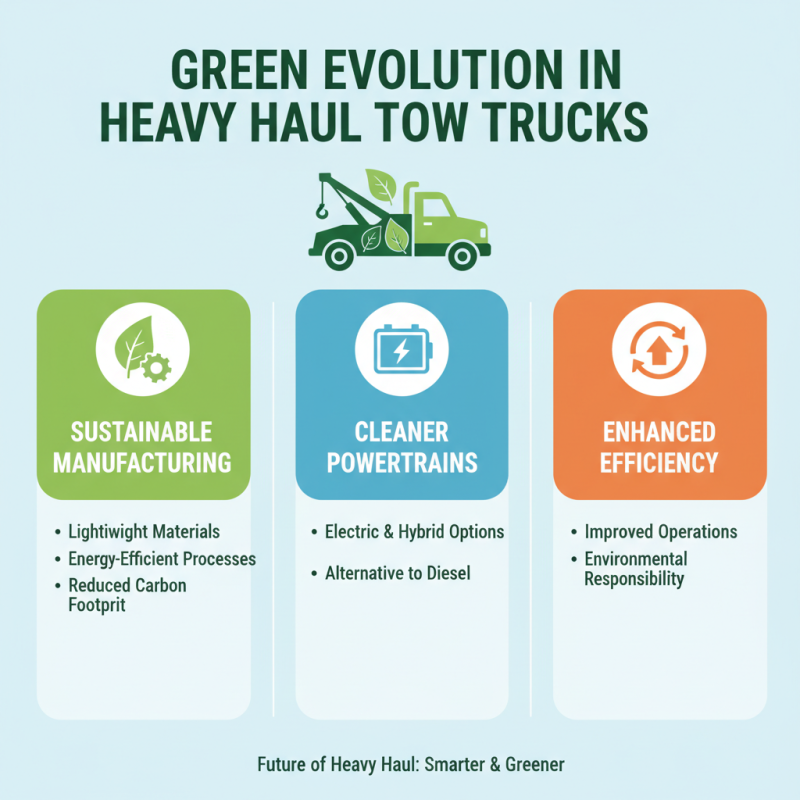
The heavy haul tow truck industry is witnessing a significant shift towards sustainable manufacturing practices as environmental concerns become increasingly crucial. Manufacturers are now prioritizing green technologies, utilizing lightweight materials, and implementing energy-efficient processes. This progression not only reduces the carbon footprint of vehicle production but also enhances the overall efficiency of heavy haul operations. Moreover, advancements in electric and hybrid powertrains are making their way into the Heavy Tow Truck sector, offering a cleaner alternative to traditional diesel engines.
### Tips for Eco-Friendly Heavy Haul Tow Truck Operators
1. **Consider Alternative Fuels**: Evaluate the potential of biofuels or electric power systems for your fleet to lower emissions and operational costs.
2. **Invest in Technology**: Leverage telematics and advanced route planning software to reduce fuel consumption and optimize vehicle utilization.
3. **Regular Maintenance**: Ensure your trucks are well-maintained; this can enhance fuel efficiency and prolong vehicle life, aligning with sustainability goals.
Adopting these practices not only contributes to a healthier planet but can also distinguish operators in a competitive market, making sustainability a key factor in business growth within the heavy haul towing industry.
Consumer Preferences Shaping Future Heavy Haul Tow Truck Designs
The heavy haul tow truck industry is experiencing a significant transformation driven by evolving consumer preferences. As customers demand more efficient and versatile towing solutions, manufacturers are focusing on innovative designs that meet these needs. Features such as increased payload capacities, improved fuel efficiency, and advanced safety systems are becoming standard expectations among consumers. This shift reflects a broader trend towards sustainability and operational cost-effectiveness in the transportation sector.
Moreover, technology integration is at the forefront of design considerations. Consumers are increasingly leaning towards tow trucks equipped with smart technology, such as real-time tracking systems, automated loading mechanisms, and intuitive user interfaces. These advancements not only enhance the overall user experience but also boost operational efficiency, appealing to businesses looking to maximize productivity. As the industry adapts to these changing preferences, the focus will remain on creating robust, reliable, and user-centric solutions that align with the demands of an ever-evolving marketplace.
Regulatory Changes Affecting Heavy Haul Tow Truck Operations in 2025
In 2025, regulatory changes are poised to significantly reshape heavy haul tow truck operations. One of the most critical updates stems from enhanced safety regulations aimed at reducing accidents on the road. These regulations will likely mandate the implementation of advanced technology in tow trucks, including real-time tracking systems and enhanced communication tools, allowing for greater operational transparency. Operators will need to stay abreast of these developments, as compliance will not only improve safety but also help in avoiding penalties.
Additionally, environmental regulations are expected to tighten as governments impose stricter emissions standards on heavy-duty vehicles. As a result, heavy haul tow truck companies will need to explore eco-friendlier solutions, such as transitioning to electric or hybrid models. This shift not only aligns with sustainability goals but also responds to growing consumer demands for greener logistics. Adopting these practices could pose a challenge for some operators but will ultimately position them advantageously in a progressively eco-conscious marketplace.
Embracing these regulatory changes will be vital for success in the evolving landscape of heavy haul towing operations.
Market Leaders: Companies Paving the Way in Heavy Haul Tow Truck Innovation
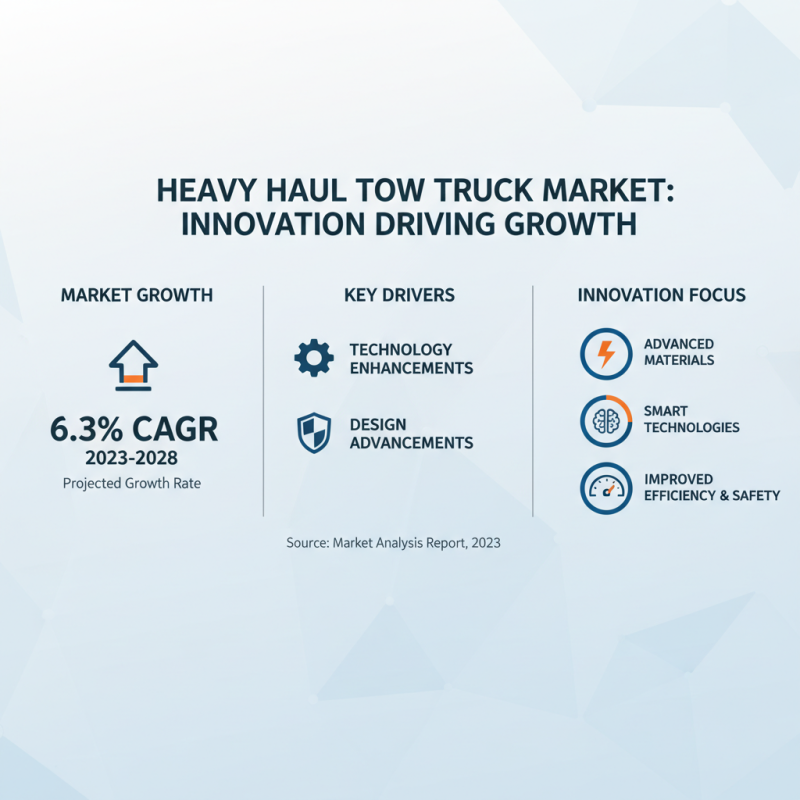
The heavy haul tow truck market is witnessing significant advancements driven by a few key players who are at the forefront of innovation. According to a recent market analysis report, the heavy tow truck segment is projected to grow at a compound annual growth rate (CAGR) of 6.3% from 2023 to 2028, largely attributed to the continuous enhancements in technology and design. Companies are increasingly incorporating advanced materials and smart technologies to improve efficiency, safety, and overall performance of tow trucks.
In addition to lightweight materials, the integration of telematics systems has become a major trend among market leaders. These systems provide real-time data on vehicle performance and route optimization, allowing fleet operators to reduce operational costs and improve service reliability. A report from a leading industry research group indicates that over 55% of heavy haul towing companies are investing in telematics and automated solutions, demonstrating a clear shift towards data-driven decision-making. These innovations not only enhance the towing capabilities but also significantly reduce the environmental impact of heavy haul operations, aligning with the increasing focus on sustainability in the transportation sector.
Maximizing Efficiency in the Heavy-Duty Truck Market: Insights on Shacman F3000 and Sinotruk HOWO Models
In the competitive heavy-duty truck market, maximizing operational efficiency is crucial for businesses relying on robust transportation solutions. The latest advancements in settings like the 8*4 dump truck segment illustrate significant progress in both performance and design. With an overall length ranging from 10,730 mm to 11,900 mm and width between 2,490 mm and 2,550 mm, these trucks are engineered for stability and strength, making them ideal for heavy-load hauling.
One standout feature is the incorporation of high-torque engine systems, such as those providing outputs like the WP12.430E201. These engines not only enhance power delivery but also significantly improve fuel efficiency—an essential factor in reducing operational costs over time. According to industry reports, trucks with optimized fuel designs can lead to savings of up to 15% in fuel consumption, translating into substantial financial benefits for fleet operators.
Alongside powerful engines, the durability of critical components such as MAN axles plays a pivotal role in ensuring long-lasting performance even under extreme conditions. With a rated mass of approximately 15,930 kg and kerb masses varying from 13,500 kg to 18,000 kg, these trucks are capable of handling diverse cargo sizes across various applications. The adaptability offered by different cargo box sizes further allows businesses to tailor solutions specific to their operational needs, thus enhancing overall efficiency in the heavy-duty truck sector.
FAQS
: Consumer preferences are shifting towards more efficient and versatile towing solutions, focusing on increased payload capacities, improved fuel efficiency, advanced safety systems, and innovative designs that reflect sustainability and operational cost-effectiveness.
Technology integration is a key focus, with consumers favoring tow trucks equipped with smart technology, real-time tracking systems, automated loading mechanisms, and intuitive user interfaces that enhance user experience and operational efficiency.
In 2025, enhanced safety regulations will be implemented, likely mandating advanced technology such as real-time tracking systems and better communication tools to improve operational transparency and reduce accidents.
Compliance is crucial as it not only enhances safety but also helps operators avoid penalties, ensuring smoother operations in line with evolving legal requirements.
Stricter emissions standards for heavy-duty vehicles are expected, prompting heavy haul tow truck companies to explore eco-friendlier solutions, such as electric or hybrid models.
While transitioning to eco-friendly practices may pose challenges for some operators, it positions them favorably in a marketplace increasingly influenced by consumer demand for greener logistics.
Consumer demands are driving manufacturers to create robust, reliable, and user-centric solutions that meet the needs of an evolving marketplace, emphasizing efficiency and sustainability.
Standard expectations include increased payload capacities, improved fuel efficiency, advanced safety systems, and the incorporation of smart technology to enhance functionality.
Embracing regulatory changes and adapting to new technologies and sustainability practices will be vital for companies to maintain competitiveness in a changing landscape.
Operators should stay updated on regulatory developments, invest in advanced technologies, and consider eco-friendly options to ensure compliance and enhance their market position.
Conclusion
The article "2025 Top Heavy Haul Tow Truck Trends: What You Need to Know" provides a comprehensive overview of the heavy haul tow truck market, projecting significant growth driven by technological advancements and evolving consumer preferences. Key trends include the integration of automation in heavy haul tow trucks, which enhances efficiency and safety, alongside sustainable manufacturing practices that are becoming increasingly important in the industry.
Moreover, the article highlights the impact of regulatory changes on operations, emphasizing the need for manufacturers and operators to adapt to new standards. As market leaders innovate and respond to these trends, they are shaping the future design and functionality of heavy haul tow trucks, ensuring that they meet the demands of a changing landscape. Overall, understanding these trends is essential for stakeholders in the heavy haul tow truck market to remain competitive and compliant moving into 2025.